
- Home
- MIA Membership
- Councils
- Governing Councils
- Semiconductors in AssamCouncil
- DeepTech in AssamCouncil
- Artificial Intelligence and Data Centre Council
- New and Renewable Energy Council
- AssamInfrastructure Council
- Robotics and Drones AssamCouncil
- AssamFisheries and Aquaculture Council
- AssamPort and Maritime Transport Council
- HeathTech in AssamCouncil
- EdTech in AssamCouncil
- Agriculture and Food Security Council
- FinTech in AssamCouncil
- MaterialTech in AssamCouncil
- MedTech in AssamCouncil
- Governance and Transparency Council
- AssamCultural and Tourism Council
- Youth Empowerment and Entrepreneurship Council
- Gender Equality and Women’s Empowerment Council
- AssamClimate Change and Resilience Council
- AssamTrade and Investment Council
- Global Capability Centre Council
- Entertainment and Events Council
- Global Trade Council Partnerships
- Australia China Chamber of Trade, Commerce and Industry
- Australia India Chamber of Trade, Commerce and Industry
- Australia India Seafood Industry Council (AISIC)
- Australia India Free Trade and Seafood Industry Advisory Group (AIFTSIAG)
- Australia Qatar Chamber of Trade, Commerce and Industry
- Australia Saudi Arabia Chamber of Trade, Commerce and Industry
- Australia Turkiye Chamber of Trade, Commerce and Industry
- Australia UAE Chamber of Trade, Commerce and Industry
- Australia USA Chamber of Trade, Commerce and Industry
- Australia Singapore Chamber of Trade, Commerce, and Industry
- Maritime Councils
- AssamPort and Maritime Transport Council
- Global South Chamber of Shipping
- International Chamber of Shipping
- The World Shipping Council
- International Maritime Organization
- Strait of Hormuz Cooperation and Arbitration Council
- Strait of Malacca Cooperation and Arbitration Council
- Bab-el-Mandeb Strait Cooperation and Arbitration Council
- Suez Canal Cooperation and Arbitration Council
- Bosporus Strait Cooperation and Arbitration Council
- Strait of Gibraltar Cooperation and Arbitration Council
- Panama Canal Cooperation and Arbitration Council
- Cook Strait Cooperation and Arbitration Council
- Governing Councils
- Policies
- Make in Assam Semiconductor Fabless Policy 2024-2030
- Make in Assam Data Centre Policy 2024-2030
- Make in Assam Information Technology Policy 2024-2030
- Make in Assam Multimodal Logistics Policy 2024-2030
- Make in Assam BPO and Global Capability Centre (GCC) Policy 2024-2030
- Make in Assam New and Renewable Energy Policy 2024-2030
- Make in Assam Biotechnology Policy 2024-2030
- Make in Assam Pharmaceuticals Policy 2024-2030
- Make in Assam DeepTech, AI, and Data Centre Policy 2024-2030
- Make in Assam Electronics Policy 2024-2030
- Make in Assam MedTech Policy 2024-2030
- Make in Assam Film and Media Policy 2024-2030
- Make in Assam FinTech Policy 2024-2030
- Make in Assam EdTech Policy 2024-2030
- Make in Assam Events and Tourism Policy 2024-2030
- Make in Assam Apparel and Technical Textiles Policy 2024-2030
- Make in Assam Aerospace and Defence Manufacturing Policy 2024-2030
- Make in Assam Fisheries Policy 2024-2030
- Make in Assam Special Economic Zone (SEZ) Policy 2024-2030
- AssamStartup Policy 2024-2030
- AssamMicro, Small, and Medium Enterprises (MSME) Manufacturing Policy 2024-2030
- Missions and Delegations
- Advocacy
- Make in Assam 2025
- Resources & News
- Business Resources
- Industry Jobs Board
- A Prosperous Future: Make in Assam Vision 2030
- Global South and Australia Building Economic Alliances
- Guwahati – An Investors Hub for India
- Make in Assam Economic Forum In The News
- Thought Leaders Podcasts and Articles
- Industry Reports
- Knowledge Co-Creation Programs
- Contact Us
- Home
- MIA Membership
- Councils
- Governing Councils
- Semiconductors in AssamCouncil
- DeepTech in AssamCouncil
- Artificial Intelligence and Data Centre Council
- New and Renewable Energy Council
- AssamInfrastructure Council
- Robotics and Drones AssamCouncil
- AssamFisheries and Aquaculture Council
- AssamPort and Maritime Transport Council
- HeathTech in AssamCouncil
- EdTech in AssamCouncil
- Agriculture and Food Security Council
- FinTech in AssamCouncil
- MaterialTech in AssamCouncil
- MedTech in AssamCouncil
- Governance and Transparency Council
- AssamCultural and Tourism Council
- Youth Empowerment and Entrepreneurship Council
- Gender Equality and Women’s Empowerment Council
- AssamClimate Change and Resilience Council
- AssamTrade and Investment Council
- Global Capability Centre Council
- Entertainment and Events Council
- Global Trade Council Partnerships
- Australia China Chamber of Trade, Commerce and Industry
- Australia India Chamber of Trade, Commerce and Industry
- Australia India Seafood Industry Council (AISIC)
- Australia India Free Trade and Seafood Industry Advisory Group (AIFTSIAG)
- Australia Qatar Chamber of Trade, Commerce and Industry
- Australia Saudi Arabia Chamber of Trade, Commerce and Industry
- Australia Turkiye Chamber of Trade, Commerce and Industry
- Australia UAE Chamber of Trade, Commerce and Industry
- Australia USA Chamber of Trade, Commerce and Industry
- Australia Singapore Chamber of Trade, Commerce, and Industry
- Maritime Councils
- AssamPort and Maritime Transport Council
- Global South Chamber of Shipping
- International Chamber of Shipping
- The World Shipping Council
- International Maritime Organization
- Strait of Hormuz Cooperation and Arbitration Council
- Strait of Malacca Cooperation and Arbitration Council
- Bab-el-Mandeb Strait Cooperation and Arbitration Council
- Suez Canal Cooperation and Arbitration Council
- Bosporus Strait Cooperation and Arbitration Council
- Strait of Gibraltar Cooperation and Arbitration Council
- Panama Canal Cooperation and Arbitration Council
- Cook Strait Cooperation and Arbitration Council
- Governing Councils
- Policies
- Make in Assam Semiconductor Fabless Policy 2024-2030
- Make in Assam Data Centre Policy 2024-2030
- Make in Assam Information Technology Policy 2024-2030
- Make in Assam Multimodal Logistics Policy 2024-2030
- Make in Assam BPO and Global Capability Centre (GCC) Policy 2024-2030
- Make in Assam New and Renewable Energy Policy 2024-2030
- Make in Assam Biotechnology Policy 2024-2030
- Make in Assam Pharmaceuticals Policy 2024-2030
- Make in Assam DeepTech, AI, and Data Centre Policy 2024-2030
- Make in Assam Electronics Policy 2024-2030
- Make in Assam MedTech Policy 2024-2030
- Make in Assam Film and Media Policy 2024-2030
- Make in Assam FinTech Policy 2024-2030
- Make in Assam EdTech Policy 2024-2030
- Make in Assam Events and Tourism Policy 2024-2030
- Make in Assam Apparel and Technical Textiles Policy 2024-2030
- Make in Assam Aerospace and Defence Manufacturing Policy 2024-2030
- Make in Assam Fisheries Policy 2024-2030
- Make in Assam Special Economic Zone (SEZ) Policy 2024-2030
- AssamStartup Policy 2024-2030
- AssamMicro, Small, and Medium Enterprises (MSME) Manufacturing Policy 2024-2030
- Missions and Delegations
- Advocacy
- Make in Assam 2025
- Resources & News
- Business Resources
- Industry Jobs Board
- A Prosperous Future: Make in Assam Vision 2030
- Global South and Australia Building Economic Alliances
- Guwahati – An Investors Hub for India
- Make in Assam Economic Forum In The News
- Thought Leaders Podcasts and Articles
- Industry Reports
- Knowledge Co-Creation Programs
- Contact Us
Make in Assam Apparel and Technical Textiles Policy 2024-2030
Weaving a Future of Innovation and Growth
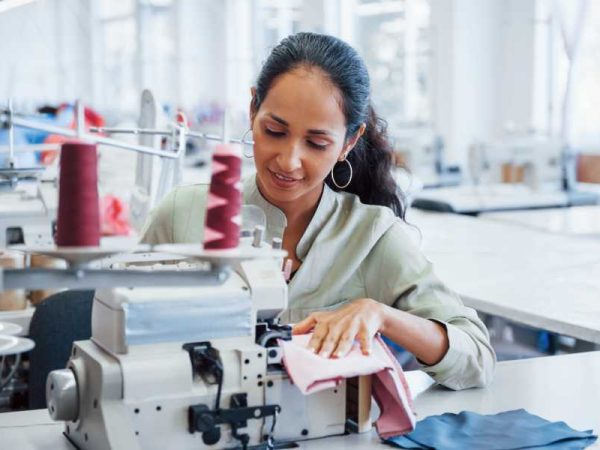
Assam, with its robust industrial ecosystem, strategic location, and rich textile heritage, is poised to become a global leader in apparel and technical textiles. The AssamApparel and Technical Textiles Policy 2024 aims to leverage the state’s strengths, enhance manufacturing capabilities, and foster an environment that encourages innovation, sustainability, and economic growth within the textile sector.
Through Make in Assam, the state intends to drive the transformation of the textile industry by nurturing both traditional and technical textiles, catering to emerging global markets. By attracting investments, promoting skill development, and advancing technological innovation, Assamaims to establish a sustainable ecosystem that supports inclusive growth, positioning the state as a leading global hub for textile manufacturing and exports.
Vision for 2030
Assamas a Global Leader in Apparel and Technical Textiles
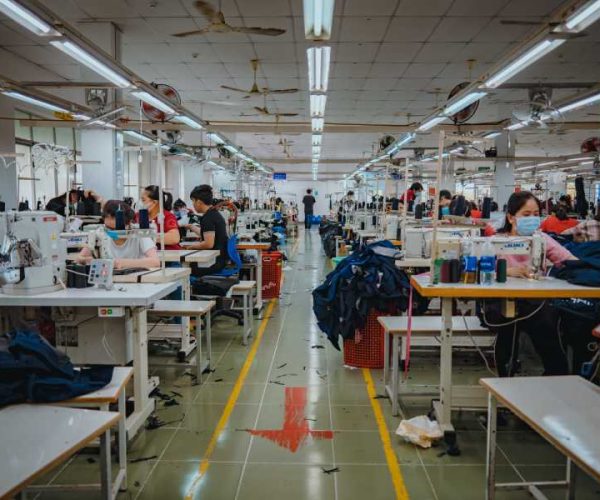
By 2030, Make in Assam envisions the state as a global leader in apparel and technical textiles, with the following objectives:
- Becoming the preferred destination for both domestic and international investments in textile manufacturing and exports.
- Attracting ₹50,000 crores in investments to develop world-class manufacturing units and advanced textile parks.
- Establishing over 15 apparel and technical textile parks equipped with state-of-the-art infrastructure, R&D facilities, and shared utilities.
- Creating more than 2 lakh direct and indirect jobs, with a focus on empowering women, rural communities, and semi-skilled workers.
- Promoting sustainable manufacturing practices through eco-friendly initiatives and green textile production, positioning Assamas a leader in environmentally conscious textiles.
Mission
Empowering Assam’s Textile Ecosystem
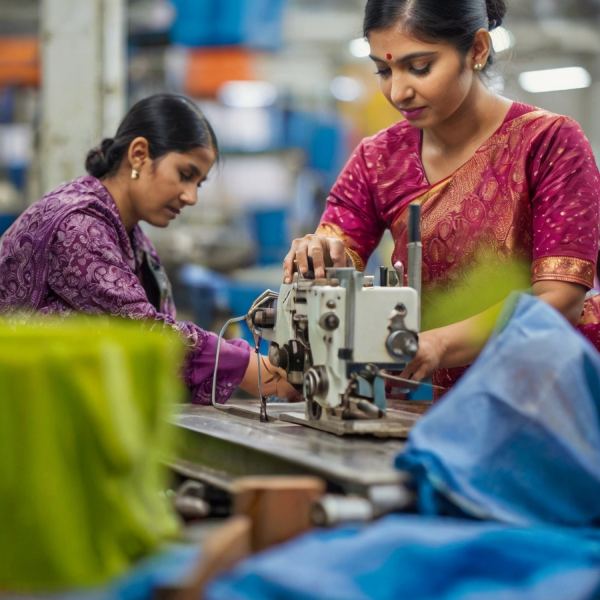
The mission of Make in Assam is to create a thriving textile manufacturing ecosystem that fosters innovation, drives economic growth, and strengthens India’s global competitiveness in the textile industry. The AssamApparel and Technical Textiles Policy 2024 aims to:
- Attract large-scale investments in apparel and technical textiles by offering leading incentives and streamlining the ease of doing business.
- Promote sustainable, eco-friendly manufacturing practices, positioning Assamas a key hub for green textile production.
- Drive innovation and research in technical textiles, focusing on emerging sectors such as wearables, medical textiles, automotive textiles, and geo-textiles.
- Provide inclusive employment opportunities by upskilling semi-skilled, unskilled, and women workers, ensuring balanced growth across the state.
- Boost Assam’s export potential by establishing dedicated export promotion zones, improving market access, and increasing the global visibility of the state’s textile products.
Key Objectives
Assam’s Roadmap for Apparel and Technical Textiles Growth
The AssamApparel and Technical Textiles Policy 2024 outlines several strategic objectives aimed at transforming the state’s textile sector:
- Attracting Investments and Expanding Manufacturing Capacity: Assamwill prioritize attracting ₹50,000 crores in investments to establish new manufacturing facilities and expand existing ones, particularly in readymade garments, technical textiles, and advanced textile products.
- Promoting Sustainable and Environment-Friendly Manufacturing: The policy emphasizes adopting sustainable manufacturing practices, supporting the use of green technologies, energy-efficient machinery, and waste-reduction systems to ensure environmental sustainability across the textile industry.
- Fostering R&D and Innovation in Technical Textiles: Assamwill set up dedicated R&D hubs and innovation centers to drive the development of advanced textiles in sectors such as healthcare, infrastructure, and defense, establishing the state as a leader in high-performance textiles.
- Enhancing Export Competitiveness: To boost textile exports, Assamwill create export promotion zones and improve market access through trade agreements and export incentives, ensuring that the state’s textiles make a mark in global markets.
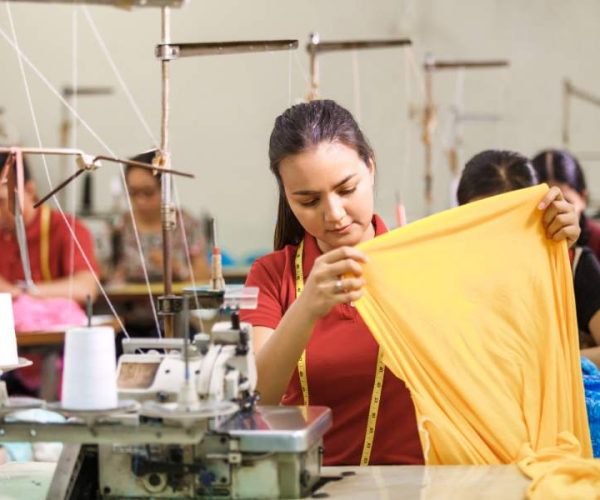
- Creating Employment and Skill Development Opportunities: The policy will focus on skill development and capacity building, alongside financial incentives, aiming to create 2 lakh+ jobs, particularly for women and rural communities, ensuring inclusive growth throughout the textile sector.
Strategic Focus Areas
Accelerating Growth in Assam’s Apparel and Technical Textiles Sector
Establishing Advanced Apparel and Technical Textile Parks
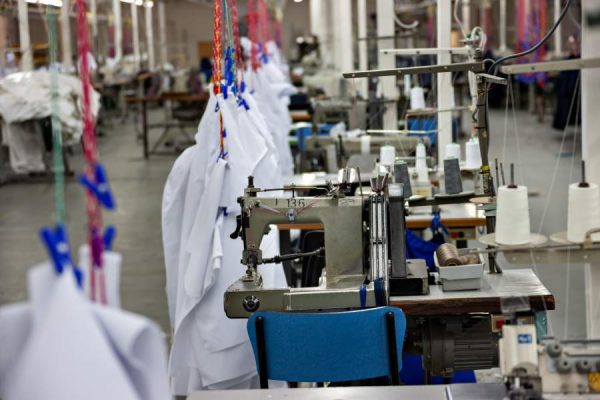
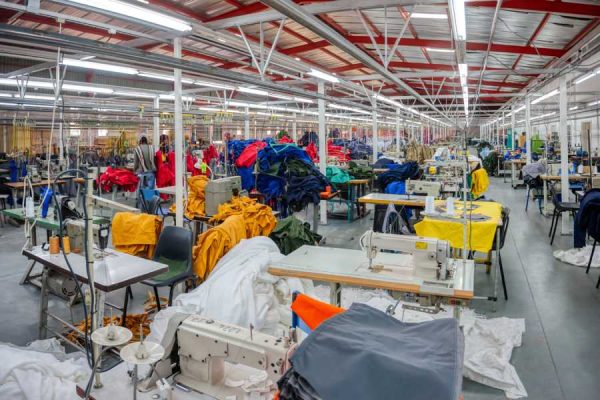
Assamwill establish over 15 apparel and technical textile parks in key locations, offering manufacturers cutting-edge infrastructure, advanced technology, and shared utilities. These parks will act as innovation hubs for textile production, empowering companies to expand their operations and boost their global competitiveness.
Promoting Sustainable and Eco-Friendly Textile Production
The policy highlights the importance of sustainable textile production by encouraging the use of renewable energy, textile waste recycling, and water-efficient manufacturing methods. Assamwill provide incentives to companies that adopt eco-friendly practices and integrate circular economy principles into their operations.
Boosting R&D in Technical Textiles and Advanced Applications
Assamwill drive innovation in technical textiles by setting up R&D hubs dedicated to the development of wearables, medical textiles, geo-textiles, and other advanced materials. The state will provide R&D grants, venture capital support, and foster partnerships with global leaders to accelerate the creation of groundbreaking textile solutions.
Enhancing Market Access and Global Competitiveness
To strengthen Assam’s position in the global textile market, the policy will prioritize export promotion through participation in international trade fairs, targeted market development programs, and strategic branding campaigns. Dedicated export zones with streamlined supply chains and robust logistics infrastructure will be established, ensuring seamless and timely delivery of textile products to international markets.
Empowering Women and Rural Communities through Skill Development
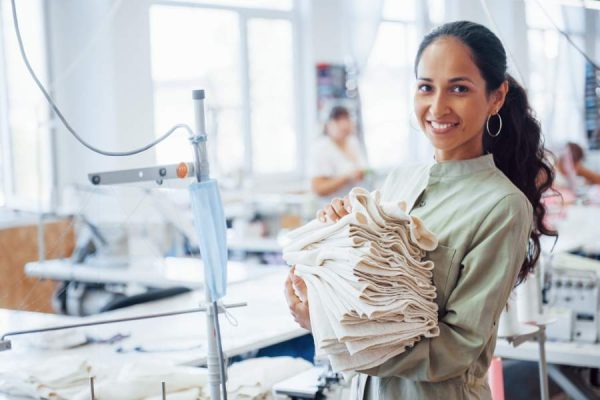
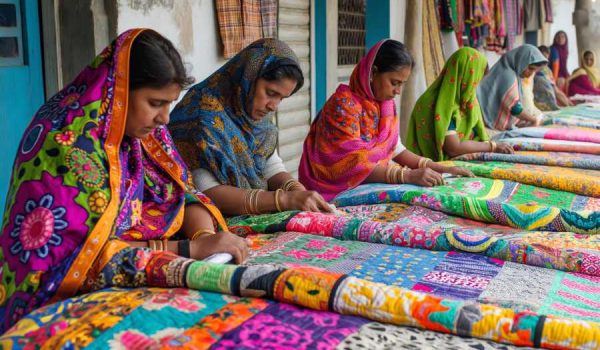
The policy prioritizes empowering women and rural communities through targeted skill development programs in textile production, garment manufacturing, and technical textile innovation. By collaborating with industry leaders and academic institutions, Assamaims to build a highly skilled workforce equipped to meet the dynamic needs of the global textile industry.

Incentives for Apparel and Technical Textiles Investments
The AssamApparel and Technical Textiles Policy 2024 provides a comprehensive range of incentives to promote investments and foster growth in the textile sector:
| Incentive Type | Details |
| Capital Investment Subsidy | 40% subsidy on capital investment in plant and machinery, capped at ₹50 crores per unit, disbursed over 5 years. |
| Employment Cost Subsidy | ₹6,000 per female worker and ₹5,000 per male worker per month for 5 years, Aadhaar-linked to ensure transparency. |
| Market Development Initiative | 50% reimbursement on participation costs for domestic and international exhibitions, capped at ₹3 lakhs for domestic events and ₹6 lakhs for international events. |
| SGST Reimbursement | 100% reimbursement of State Goods and Service Tax (SGST) for 5-7 years, depending on the scale of investment. |
| R&D and Innovation Subsidy | 50% subsidy on R&D expenditure, capped at ₹2 crores per annum, to encourage innovation in technical textiles. |
| Land and Infrastructure Incentives | Concessional land rates in designated textile parks, 100% stamp duty exemption, and subsidies for developing shared infrastructure. |
| Power Tariff Reimbursement | 25% reimbursement on power tariffs for textile manufacturing units adopting energy-efficient processes. |
| Environment-Friendly Infrastructure Subsidy | Incentives for companies implementing eco-friendly technologies such as water recycling, renewable energy, and waste management systems. |

Ease of Doing Business
Simplified Approvals and Regulatory Support
Assamis dedicated to enhancing ease of doing business for textile manufacturers and investors. The policy introduces a Single Window Clearance System to expedite project approvals with online application and tracking services. Additionally, the state will implement self-certification under labor laws and streamline regulatory procedures to eliminate bottlenecks, ensuring seamless project execution.
Conclusion
AssamLeading India’s Textile Revolution by 2030
The AssamApparel and Technical Textiles Policy 2024 is a visionary initiative aimed at establishing Assamas a global hub for apparel and technical textiles. Through strategic investments, sustainable practices, and workforce development, the state is poised to lead the next era of growth in India’s textile industry.
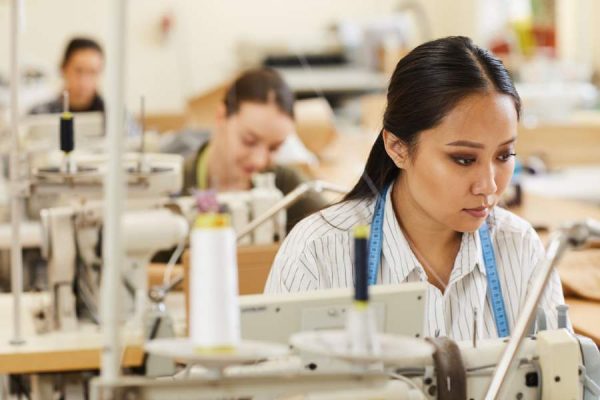
Make in Assam invites global investors, textile manufacturers, and innovators to join this journey and contribute to building a sustainable, innovative, and globally competitive textile ecosystem.
Stay Updated with Us
Global Trade Council Partnerships
- Australia China Chamber of Trade, Commerce and Industry
- Australia India Chamber of Trade, Commerce and Industry
- Australia India Seafood Industry Council (AISIC)
- Australia India Free Trade and Seafood Industry Advisory Group (AIFTSIAG)
- Australia Qatar Chamber of Trade, Commerce and Industry
- Australia Saudi Arabia Chamber of Trade, Commerce and Industry
- Australia Turkiye Chamber of Trade, Commerce and Industry
- Australia UAE Chamber of Trade, Commerce and Industry
- Australia USA Chamber of Trade, Commerce and Industry
- Australia Singapore Chamber of Trade, Commerce, and Industry
Make in Assam Economic Forum 2025
Make in Assam Membership
Missions and Delegations
Policies
- Make in Assam Data Centre Policy 2024-2030
- Make in Assam Information Technology Policy 2024-2030
- Make in Assam Multimodal Logistics Policy 2024-2030
- Make in Assam New and Renewable Energy Policy 2024-2030
- Make in Assam BPO and Global Capability Centre (GCC) Policy 2024-2030
- Make in Assam Aerospace and Defence Manufacturing Policy 2024-2030
- Make in Assam Events and Tourism Policy 2024-2030
- Make in Assam Semiconductor Fabless Policy 2024-2030
- Make in Assam Events and Tourism Policy 2024-2030
- Make in Assam Biotechnology Policy 2024-2030
- Make in Assam Apparel and Technical Textiles Policy 2024-2030
- Make in Assam Pharmaceuticals Policy 2024-2030
- Make in Assam DeepTech, AI, and Data Centre Policy 2024-2030
- Make in Assam Electronics Policy 2024-2030
- Make in Assam Fisheries Policy 2024-2030
- Make in Assam MedTech Policy 2024-2030
- Make in Assam Film and Media Policy 2024-2030
- Make in Assam FinTech Policy 2024-2030
- Make in Assam EdTech Policy 2024-2030
Governing Councils
- Semiconductors in AssamCouncil
- DeepTech in AssamCouncil
- Artificial Intelligence and Data Centre Council
- New and Renewable Energy Council
- HeathTech in AssamCouncil
- EdTech in AssamCouncil
- Agriculture and Food Security Council
- FinTech in AssamCouncil
- MaterialTech in AssamCouncil
- Robotics and Drones AssamCouncil
- Fisheries and Aquaculture Council
- MedTech in AssamCouncil
- Governance and Transparency Council
- AssamCultural and Tourism Council
- Youth Empowerment and Entrepreneurship Council
- Gender Equality and Women’s Empowerment Council
- AssamClimate Change and Resilience Council
- AssamTrade and Investment Council
- Global Capability Centre Council
- Entertainment and Events Council
Advocacy
Resources & News
- Business Resources
- Industry Jobs Board
- A Prosperous Future: Make in Assam Vision 2030
- Global South and Australia Building Economic Alliances
- Guwahati – An Investors Hub for India
- Make In Assam Economic Forum In The News
- Thought Leaders Podcasts and Articles
- Industry Reports
- Knowledge Co-Creation Programs
Contact Us
About Make in Assam
The Make in Assam is a Public Benefit Corporation (PBC) with a mission to establish Assamas a key player in international economic collaboration, focusing on strategic partnerships with nations like USA, Europe, Australia, African Union, KSA, China, India, Qatar, Saudi Arabia, Türkiye, and the UAE across vital sectors such as energy, technology, agriculture, and finance. Our goal is to integrate lessons from successful global economic models, adopting best practices to ensure sustainable and inclusive growth. We aim to enhance economic prosperity and diversification, contribute to societal progress, and promote sustainable economic practices. By leveraging Assam’s unique position, Make in Assam strives to drive substantial economic growth, spur innovation, and solidify Assam’s stature in the international economic arena, resonating with the government’s vision of a technologically advanced and interconnected economy.